Quick answer: Appointment no-show rates typically run between 5% and 30% depending on the setting, and the research is consistent that reminders help. In a Cochrane systematic review of randomized trials, attendance rose from 67.8% with no reminder to 78.6% with a text-message reminder. Below is a sourced roundup you can rely on — every figure links to its source.
These are findings from independent research on appointment reminders in general, not a performance guarantee for any one tool. Individual results vary.
Key no-show statistics at a glance
- No-show rates across healthcare settings commonly range from 5% to 30%, varying by specialty and how they are measured. (MGMA)
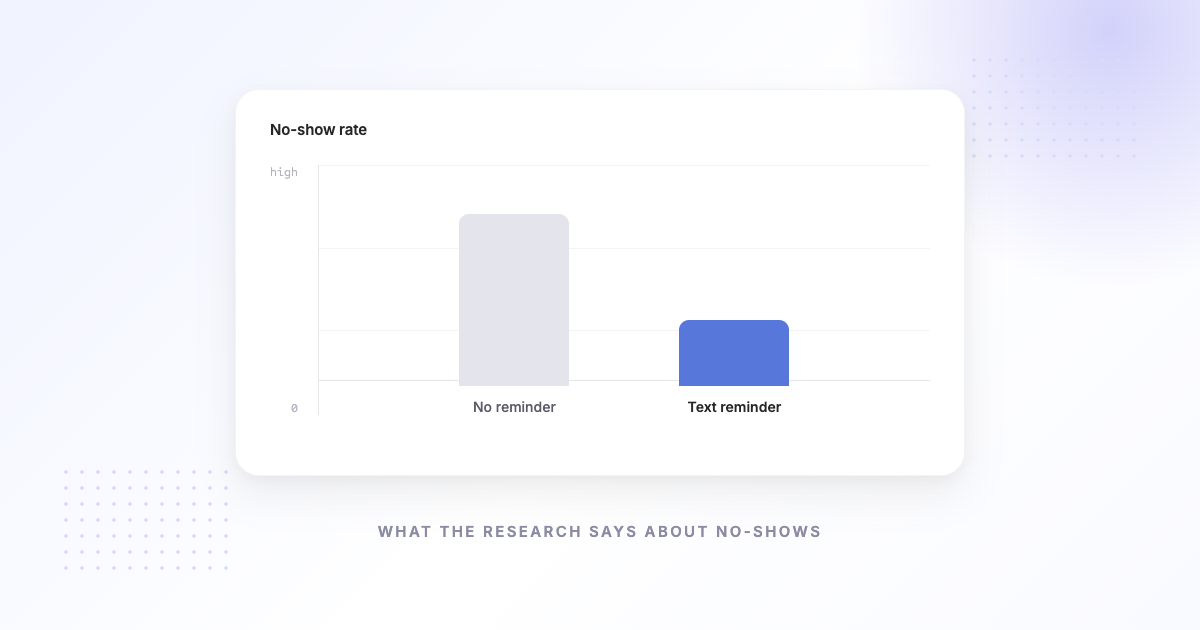
- Text-message reminders raised appointment attendance from 67.8% to 78.6% in a Cochrane review of randomized trials. (Cochrane / PubMed)
- In a pediatric randomized controlled trial, the no-show rate was 23.5% with reminders vs 38.1% without. (NCBI)
- Patients with an active patient portal had a 6.2% no-show rate vs 7.9% without one, in a 2024 analysis. (Epic Research)
- A widely cited industry estimate puts the annual cost of missed appointments to the U.S. healthcare system at about $150 billion. (HCI Innovation Group)
How common are appointment no-shows?
There is no single “average” no-show rate, because studies count them differently and rates swing widely by setting. Published figures generally land between 5% and 30%. Primary care often sits toward the lower end, while behavioral health and certain specialties run higher (MGMA).
The trend is not simply improving on its own. In a 2024 MGMA poll, most medical groups reported their no-show rates had stayed the same or decreased, but a meaningful share still saw them rise (MGMA). And no-shows are not a healthcare-only problem — any appointment-based business, from salons to trainers to trades, loses the same way when a booked slot goes empty.
How to calculate your no-show rate
Your no-show rate is the share of booked appointments where the client didn’t turn up and didn’t cancel in time:
No-show rate = (no-shows ÷ total booked appointments) × 100
For example, 6 no-shows out of 120 booked appointments in a month is a 5% no-show rate. Track it monthly and count late cancellations separately, so you can see whether reminders are moving the number. To put a dollar figure on it, try the free no-show cost calculator.
What do no-shows cost?
The cost of a missed appointment is more than one empty slot: it is the prep time, the staff time, and the chance to have booked someone else. At scale, a widely cited industry estimate puts the annual cost of missed appointments to the U.S. healthcare system at roughly $150 billion (HCI Innovation Group). Treat that as an estimate rather than a precise measurement — but it captures the scale.
For a small business, the math is simpler: multiply your average appointment value by the number of no-shows you get each month. Even a small reduction adds up across a full calendar.
Want to run these numbers against your own business? The appointment no-show cost calculator estimates what missed appointments may be costing you each month.
Do appointment reminders actually reduce no-shows?
Yes — this is one of the better-evidenced findings in the area. The strongest evidence is a Cochrane systematic review of randomized controlled trials:
| Reminder type | Appointment attendance |
|---|---|
| No reminder | 67.8% |
| Text-message (SMS) reminder | 78.6% |
| Phone-call reminder | 80.3% |
Text reminders performed similarly to phone calls, at lower cost per attendance (Cochrane / PubMed). Individual trials point the same way — a pediatric randomized controlled trial found a no-show rate of 23.5% with reminders vs 38.1% without (NCBI).
Why text reminders work
Two things make text reminders effective. First, texts get seen — they are opened far more reliably than email. Second, and more importantly, they lower the effort of responding. A client who can confirm with a one-word reply is more likely to act than one who has to open a link, log in, or call back during business hours.
That is also why two-way reminders — ones a client can reply to in order to confirm, cancel, or ask to reschedule — tend to outperform one-way notices: they remove the steps between “I got the reminder” and “I responded.” The same logic shows up in the patient-portal data, where giving patients an easy digital touchpoint was associated with fewer no-shows (6.2% vs 7.9%) (Epic Research).
How SMS Reminder helps
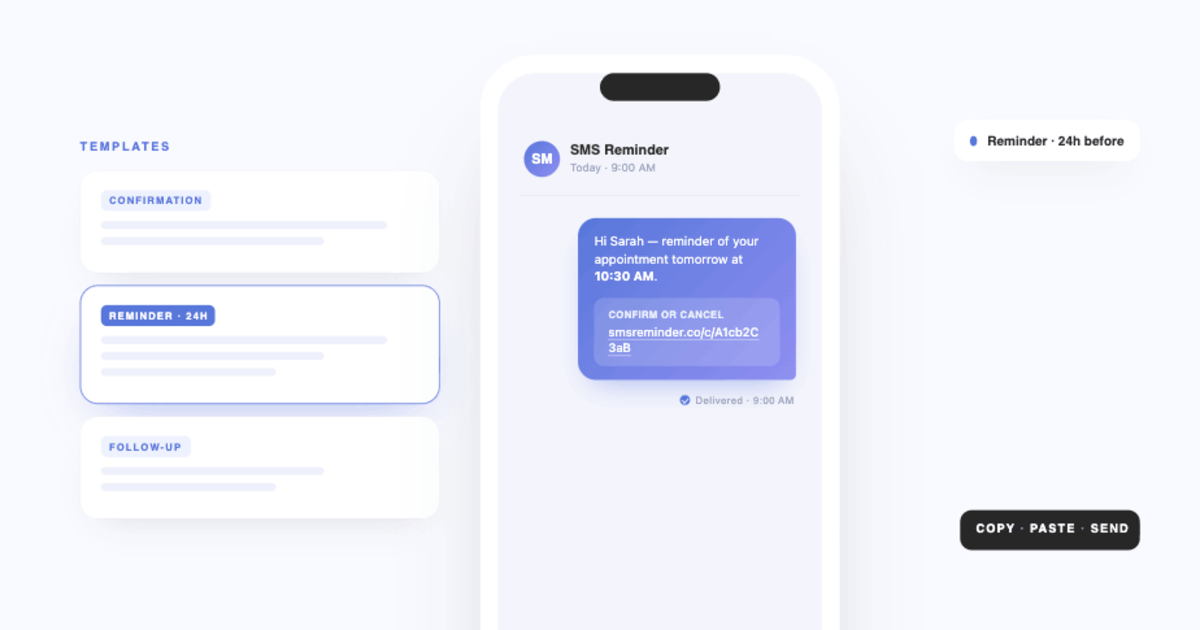
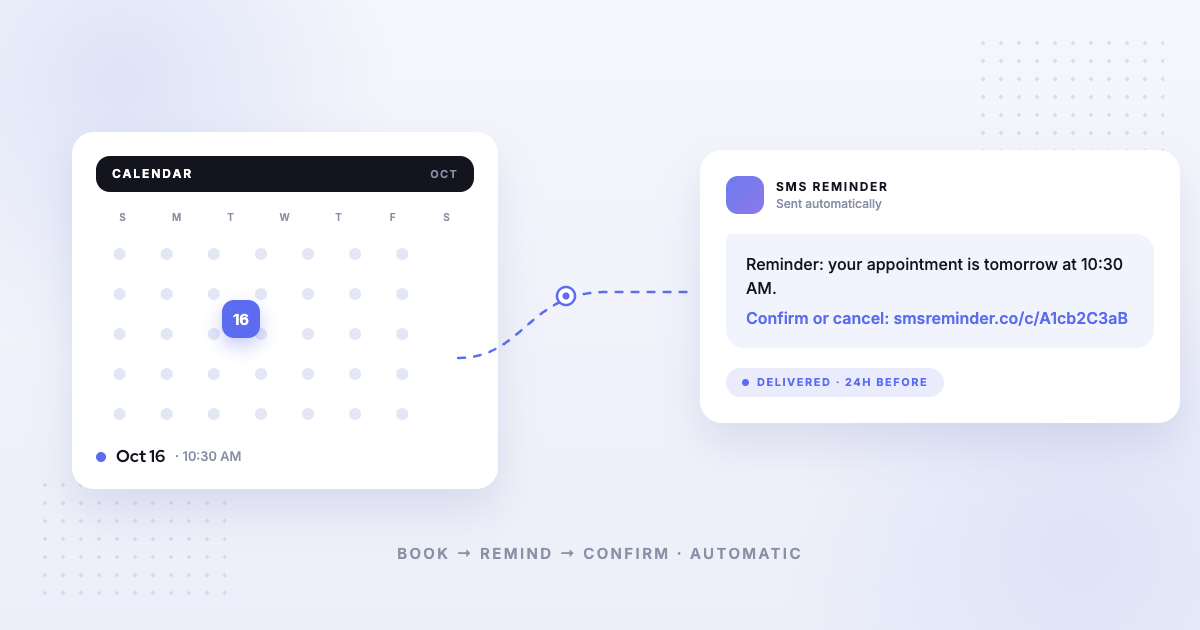
SMS Reminder sends automatic text reminders from your Google Calendar before each appointment, and clients can reply to confirm or cancel — or tap the link. If they need a different time, they ask and finish rescheduling on the booking page. It puts the research above into practice: timely texts that are easy to respond to.
Get started free and start reminding clients automatically. For practical tactics, see how to reduce no-shows for appointments.
Frequently asked questions
How do you calculate a no-show rate?
Divide the number of no-shows by the total number of booked appointments for the period, then multiply by 100. For example, 6 no-shows out of 120 appointments is a 5% no-show rate.
What is the average appointment no-show rate?
It varies widely by setting — published figures range from about 5% to 30%. Primary care often sits at the lower end, while behavioral health and some specialties run higher. There is no single universal rate because studies measure it differently.
Do text message reminders actually reduce no-shows?
Yes. A Cochrane systematic review of randomized trials found appointment attendance rose from 67.8% with no reminder to 78.6% with a text-message reminder — a level of improvement similar to phone-call reminders, at lower cost.
How much do missed appointments cost?
A widely cited industry estimate puts the cost to the U.S. healthcare system at around $150 billion a year. It is an estimate rather than a precisely measured figure, but it reflects the scale of the problem across providers.
What is the single best way to reduce no-shows?
The research points to timely reminders that make it easy to respond. Reminders clients can reply to — to confirm, cancel, or reschedule — reduce the effort of acting, which is what drives higher attendance.
Sources
- Cochrane systematic review — mobile phone messaging reminders for attendance at healthcare appointments (PubMed)
- Text message reminders in a pediatric clinic — randomized controlled trial (NCBI)
- Patient portal use associated with fewer no-shows, 2024 (Epic Research)
- Patient no-shows and automated reminders, 2024 poll (MGMA)
- Estimated annual cost of missed appointments (HCI Innovation Group)
Figures are drawn from published research and industry reporting; where a number is an estimate, it is labelled as such. Last reviewed August 2026.